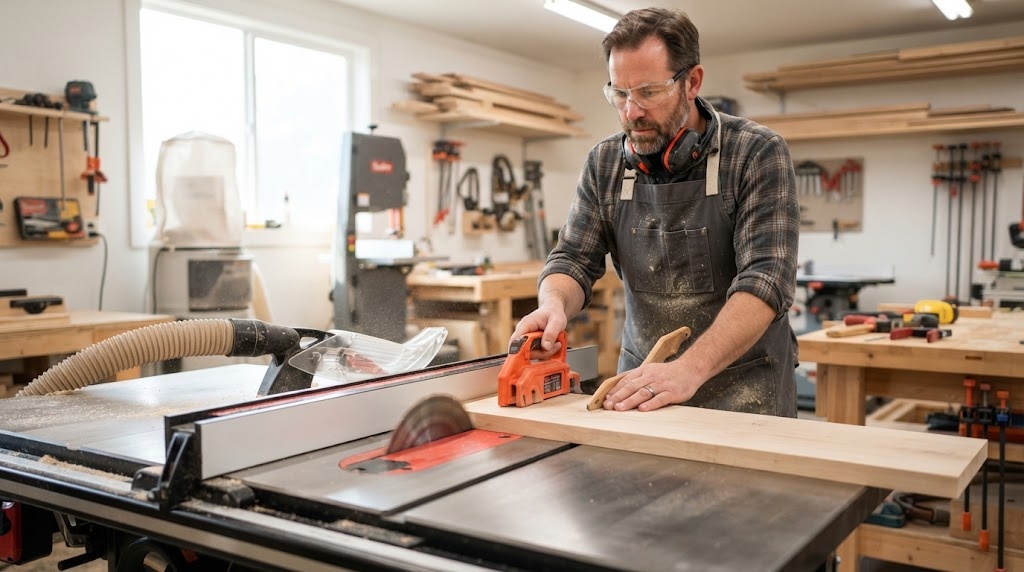
The power of a table saw to slice cleanly and near-magically through a board is astonishing. But the smooth, pristine cut mark on the resulting workpiece is actually the result of the interplay of the blade, the wood, the fence and the handler.
That leads directly to the question: how is wood cut when ripping with a table saw?
Ripping A strip cut made in wood along the grain, primarily to make a plank narrower, to make it straight, or to provide a flat edge. As the blade turns it removes a thin slice of material, known as the kerf, from your stock. As the stock travels along the rip fence to make a ripped cut it should be in the same basic direction as the grain.
Understanding what is going on at the blade is actually a lesson in carpentry, rather than joinery. Knowing the facts around the cutting edge makes perfectly plain why some boards ease through perfectly and others dig in. It tells you the difference a proper blade can make, defines the essential necessity of a dead straight reference fence, and why ripping is, of all table saw processes, the one in which to be especially mindful of kickback.
What “Ripping” Actually Means
Visualize placing a 2×8 board in front of you and using your hands to run you down the length of the board with a desire to make it into two narrower pieces. This helps explain how is wood cut when ripping with a table saw?
The blade does not cut across the short width of the board. It does not. The board is fed into the blade, and the blade cuts through the length of the board. The cut goes with the grain of the wood, effectively cutting it in half.
That is a rip cut.
This is why this cut is particularly ideal for table saws. This style of fence ensures there’s a set distance between the edge of the workpiece and the saw blade.
Once the fence is set appropriately, you won’t have any need to steer the workpiece against the saw.
This distinction is quite significant because although a table saw can be used to both rip and crosscut, the setup and accessories for ripping are not interchangeable with the setup for crosscutting. “OSHA provides detailed guidance on table saw safety and distinguishes the different cutting operations, making it a useful reference when learning how ripping works.”
How Is Wood Cut When Ripping With a Table Saw?
At the simplest level, the process involves four things working together:
The blade rotates, the teeth remove wood, the fence controls the lateral position, and the operator feeds the stock forward. This is the basic process behind how is wood cut when ripping with a table saw?
With each rotation, the tips of the teeth are forced into the front of the unburied blade. Once the board is pushed into position, subsequent teeth cut away little pieces of the wood as the board is pushed further, leaving behind what a tooth cut-out previously to be its material kerf.
This ensures it’s not being “split” off by the blade in one go as some believe the cut occurs – rather, stock is being continuously stripped away as it travels. While also ensuring it cannot slide to either side, the rip fence takes the spinning and rotary motion of the blade and uses it to create a straight, identical cut time and time again. It may be seen more easily as.
Board → forward feed → rotating teeth → material removed → two separated pieces
The quality of the final edge depends on how consistently those four elements interact.
The Blade Is Doing More Than Just Spinning
A table saw blade may be just a circular metal plate, but the shape of the teeth affects how they perform in wood. Every single tooth pierces the wood, shaving off a bit of fibre and withdrawing to create the next cut. This happens hundreds of times every second!
Ripping blades need teeth and gullets to process the stock at the high rate.
According to Fine Woodworking, ““Choosing the right blade is important because table saw blades for ripping are designed to remove material efficiently along the length of the wood while managing sawdust and cutting resistance.”
This is important; although a blade with many small teeth may work just great for one crosscutting job, the same blade may not be the most efficient for ripping. Another factor is to keep it sharp. A dull blade will produce more resistance, more heat, and potentially unwanted feeding behavior. The OSHA actually recommends keeping and sharpening your blade, and using the correct blade for the cutting task.
What Happens to the Wood Fibers?
Wood is by no means a homogeneous material. It is, in fact, an organic composite structure composed mainly of long fibres which generally lie more or less parallel to the direction of tree growth. It so happens that rip cuts cause the teeth to slice these fibres more often than chop them from end to end, providing at least one answer to how is wood cut when ripping with a table saw?, how correctly selected rip blades can powerfully remove wood, cutting with the wood and not perpetually cross cutting the grain. But ‘with the grain’ doesn’t inherently promise that the process is easy.
Grain patterns can vary along its length, while knots,internal strain, warpage or sections of resin in or out the wood will alter its behaviour. Although the board can appear straight, from a certain point of view, it may still be internally strained in such ways that will be evident when material is removed. It is in fact the very quality of the plank the seasoned joiner looks at not necessarily the tool being worked with.
The Kerf: The Material That Disappears
One of the most misunderstood elements when you’re ripping wood is the kerf, or the kerf width, generated by the saw. Rip that 8” board into two 4” wide boards, you have accounted for the width removed by the saw blade and there was a little bit lost as sawdust. Depending on the tooth set of the saw blade and its thickness, each blade will have it’s own unique kerf.
If you need two strips of exact dimensions, you can’t just take a measurement and hope it cuts off accurately. Saw blades take material up when they cut. That can build up tiny errors time after time.
Why the Rip Fence Matters So Much
The rip fence is the fence’s primary reference system for providing a straight line of reference. By keeping the board in the position where reference edge is pressed against the fence, the measurement is guaranteed to remain consistent with the width of that same reference edge to the side of the saw blade – which equals a straight rip. But the fence can’t inherently straighten out a bowed board, as Woodworking states, and you must first use straight edge against fence and flat face against table to support your wood – in addition to proper aligning of the fence in relation to the blade.
This creates a useful woodworking principle:
The fence controls the path; it does not correct defective stock.
If a board rocks on the table, bows away from the fence, or has a severely crooked reference edge, the operator may struggle to maintain consistent contact.
That can affect both accuracy and safety.
The Wood Must Stay in the Right Relationship With the Blade
A rip has all the pieces of motion going towards success at which the board travels in controlled fashion next to the fence. Do not just slam the board in to the fence, but just keep consistent control against the fence so that the board stays steady throughout the cut, especially near and past the blade.
If a board deviates from its intended path as it’s pushed through, it might come into contact with an “improper portion” of the moving circular blade. Kickback is a serious table saw risk, says the OSHAE – with greater kickback risk during ripping than in a crosscut. An properly adjusted Riving Knife or splitter keeps thekerffrom “pinching” itself against the side of the blade.italsoprevents the material itself from riding up against the rising rear teeth. Small but mighty piece of gear.
Why Grain Direction Matters During Ripping
During a rip, the saw teeth normally travel with rather than against the grain. Grain, however can shift directions unpredictably. In the case of a board with interlocked or highly figured grain, the grain might run obliquely to the edge of the board. A rip will still follow the intended path determined by the fence, yet changing grain creates varying amounts of cutting resistance. This is one reason some boards feel smooth under the blade while others seem to fight the cut. “Understanding these differences helps explain how wood is cut when ripping with a table saw and connects naturally with other woodworking tips and techniques for improving accuracy, setup, and cutting results.”
It goes a long way toward understanding why just naming the tree the wood came from isn’t a predictor of how well the species will cut. Two planks that are called by the same name can cut quite differently because of grain shape, moisture, internal stress, defects, and other factors.
Flat, Straight Stock Makes the Process Predictable
Even better than using a carefully sawn piece of wood is beginning with square-stock. Rough stock with a cupped surface where the face of the board runs across the saw table can rock during the ripping process. A crooked edge against the fence also makes it hard for your lumber to run true to the fence. Woodworking gurus at Fine Woodworking are adamant that it’s far better to deal with warped material ahead of the cut than to have the saw fight rough-sawn lumber to produce straight lumber.
For solids, that may mean jointing a face and providing it with a true edge reference to take away on the final rip. The simple objective is this-provide the table saw an edge from which to work its will.
What Makes a Rip Cut Straight?
The blade doesn’t inherently create a straight rip; it’s achieved through setup and a deliberate movement. In fact, several of these setups are crucial: blade set perfectly to a saw table and blade parts, right amount of lateral adjustment in the rip fence, a stable edge and face to work against, and a steady hand as the piece goes in. Miss any one of these (especially) and your rip can easily get away from you. Understanding these details also helps explain how is wood cut when ripping with a table saw?
Even a really high-quality fence can drift over time, saysFine Woodworking, so it’s worthwhile to check its alignment periodically. —– “It’s one of the dirty little secrets of woodworking: a truly accurate woodworking tool comes not from buying a bigger or better machine but from a good, careful setup.”- Fine Woodworking, September/October 1996 (edited slightly to apply to fences, not other joinery)
Why Kickback Happens During Ripping
The first concept I want to stress in understanding is what kickback is. This is what happens when the workpiece is trapped by the blade and the workpiece recoils toward the operator. OSHA claims the possible causes: wrong blade height, wrong blade sharpness, wrong safety guards, rough cut lumber and wrong workpiece feeding. Understanding this risk is an important part of learning how is wood cut when ripping with a table saw?
As the cut begins (or gets deeper), the wood may squeeze closed or move toward the back of the blade when ripping. The back edges of the teeth travel in an upward path and will pull the workpiece back toward the operator if they grab the work. Use an anti kickback guard (or spreader) to ensure wood doesn’t grab the blade. The OSHA recommends the use of a spreader when ripping wood, and they also lists kickback prevention devices as required safety devices for applicable saws.
The important takeaway is not to memorize a frightening scenario. It is to understand the mechanical reason for the risk.
Why a Dull Blade Is More Than an Accuracy Problem
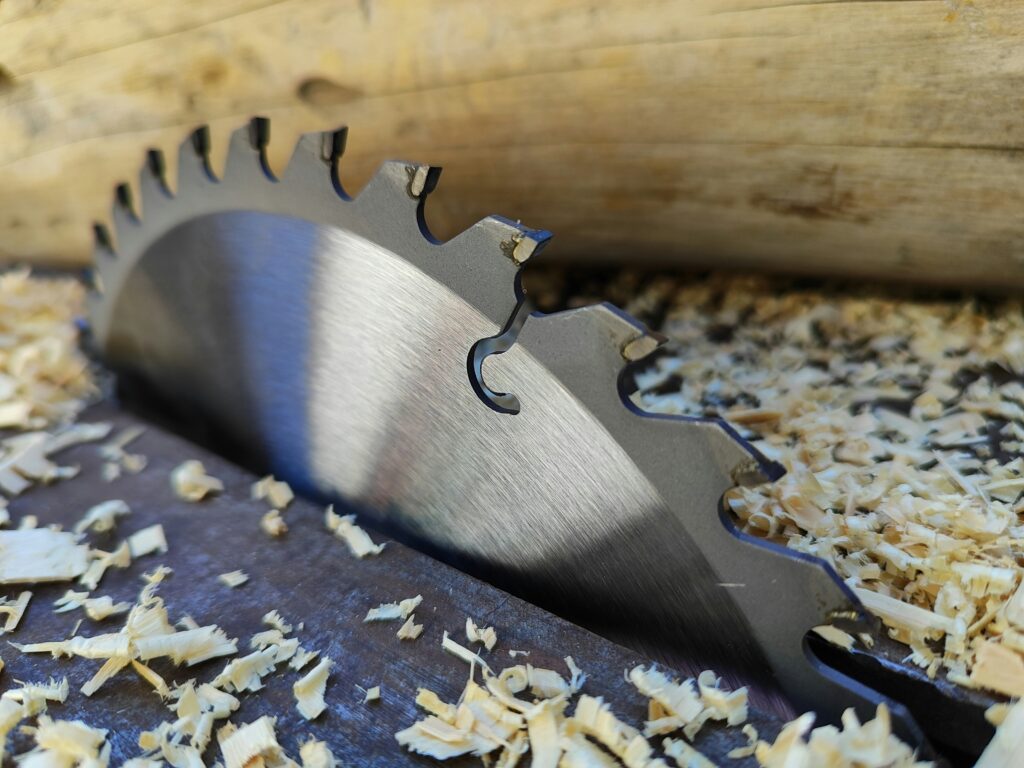
A dull blade does not simply make an ugly cut.
It can even alter the overall feel of the operation. The motor may seem to strain more. The feed might slow.
An operator might naturally apply more pressure.
It can cause increased heat, and the cut can be less predictable. OSHA specifically suggests that blades should be serviced and sharpened and cracked blades removed.
I saw a case documented in an OSHA accident investigation of a table saw that identified the dull blade being used during ripping where kickback occurred. This isn’t to say all dull blades will cause kickback, only why a blade condition needs to be part of the safety conversation, not a woodworking quality discussion.
How a Typical Rip Cut Is Set Up
To Make a Simple Rip The first step is to assess the lumber that will be ripped. Look closely at the board and make sure that it isn’t noticeably distorted (warped, twisted) and that it doesn’t feel unstable. The reference edge of the board has to suit cutting ride along the table fence. Then you want to measure from the tooth line out of your blade so your rip guide can set at. This setup is central to understanding how is wood cut when ripping with a table saw?
The blade height and your saw setup must also comply with the manufacturer’s recommendations. In particular, ensure you fit the correctly matched guard and splitter or riving knife for your particular machine if required. Likewise, long stock require support The manufacturer of fine woodworking supports infeed and outfeed of long materials due to boards have the ability to become hard to manage and can tend to slew and dive into or out of the saw once at the table.
After setup is complete the operator pushes the work pieces through the blade and keeping hands clear.
When working with a narrow piece (work piece) it will be more advisable to use a push stick or similar pushing device rather than unnecessarily approaching the saw blade. OSHA recommends push sticks for small work pieces and pushing work past the blade.
What Happens After the Cut?
When the blade reaches the other end of the stock, the original board has now become two parts, one part between the blade and the fence, and the other part on the far side of the blade from you. This cut edge is know as a rip edge. How it turns out depends on what type of blade you use, what species of wood you have, how quickly you feed the wood, how sharp the blade is, whether the blade is set square and in line and on the character of the grain. An accurately made rip produces a joinable edge, provided the stock and blade are reasonably well matched.
A table saw is also not necessarily the last operation to producing a furniture-level edge. Depending on the project, it is not unusual that the edge is subsequently jointed, planed, sanded or finished.
Ripping Solid Lumber vs. Ripping Plywood
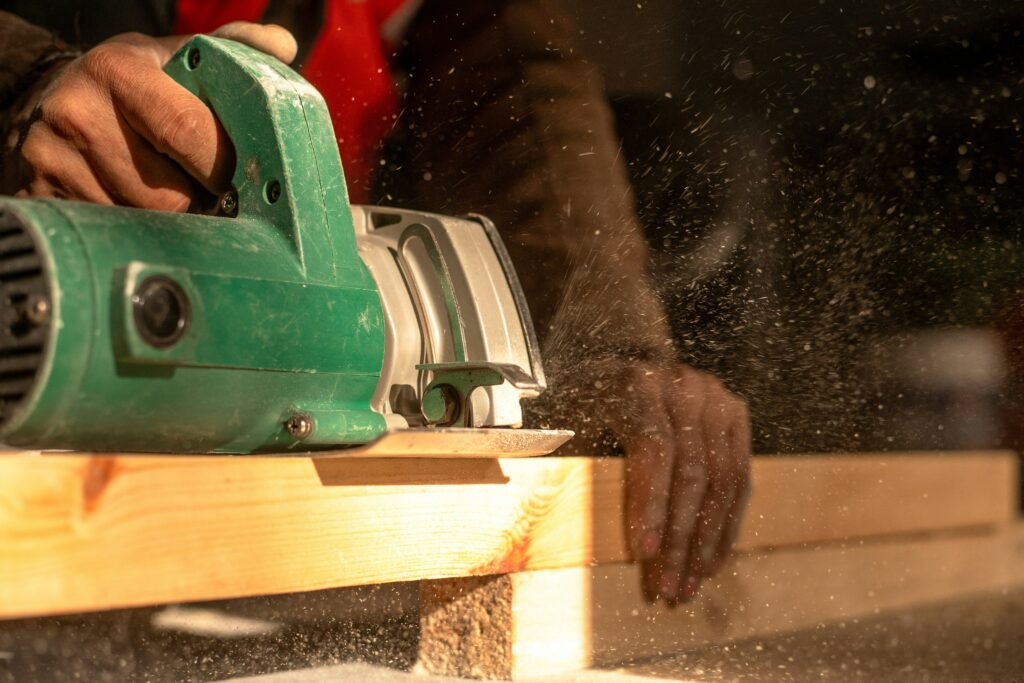
The overall cutting action is similar, but the material behaves much differently. A solid piece of lumber consists of a continuous grain structure, possibly interrupted by knots and characterized by varying degrees of tension and grain direction. Plywood consists of plies of veneer with grain direction alternating with each successive ply. According to Fine Woodworking, ripping plywood should be simpler with regard to grain structure, because there is no continuous grain structure to fight or follow, although holding wide pieces against the fence is still important.
Handling of these items presents another issue as they may far exceed the normal sizes of lumber boards. Support and control still are key.
Common Mistakes That Affect Rip Cuts
Trying to Straighten a Crooked Board With the Fence
The fence is not a jointer.
If the reference edge is significantly crooked, simply pushing it against the fence can produce an unreliable cut and potentially unsafe conditions.
Feeding Too Aggressively
More speed does not always make better. This, feed rate must be appropriate for the material, the blade and the saw; if you hear the motor labor, slow down instead of pushing it harder. On the safety page of Fine Woodworking, they actually suggest you slow the feed rate when the motor labors.
Using the Wrong Blade
A crosscut-biased blade is not the right one to use to rip. OSHA says to use the correct blade for the type of cutting action.
Removing the Workpiece Too Early
Do not reach behind a moving blade in order to obtain the piece. – Wood should be controlled all the way until it has cleared the blade and adequate guards are in use.
Fine Woodworking’s safety guidance recommends waiting until the blade has stopped before collecting stock or scrap.
A Practical Example: Turning a Wide Board Into Two Narrow Boards
Let’s start by thinking in a practical sense about a 10 inch board that we need to rip into two narrow parts. The first issue is not the placement of the fence in the saw, it is the quality of the edge and face that we start with. If we have a flat and square edge and a flat face, we have the ability to maintain a true cut. If we do not, we may need to “square up” the piece first. This is an important part of understanding how is wood cut when ripping with a table saw?
After you have the saw set for your cut, your fence defines how wide each cut-off will be. As the board is pushed into the blade the teeth take away material and the fence guides its movement side to side. You end up with the two finished pieces that correspond to the condition of the cut you have made. If the saw doesn’t leave clean, square, cuts it may be your cut-off fence is off the table, the board is bowed, you feed too quickly or unevenly, you’ve got a dull saw blade or your board doesn’t get enough support on the cutting side.
That is why good woodworking is often described as a system rather than a collection of isolated tricks.
Ripping vs. Crosscutting: The Essential Difference
The simplest comparison is directional.
| Rip Cutting | Crosscutting |
| Cuts generally parallel to the grain | Cuts across the grain |
| Usually reduces board width | Usually reduces board length |
| Uses the rip fence for guidance | Often uses a miter gauge or sled |
| Blade selection favors efficient material removal along grain | Blade selection favors cutting across fibers |
| Kickback is a major consideration | Different control and handling considerations apply |
OSHA distinguishes ripping from crosscutting and specifically warns against using the wrong guiding setup or blade for the operation.
One particularly important safety principle is to avoid using the rip fence and miter gauge together for ordinary crosscutting, as Fine Woodworking’s safety guidance explains.
The Deeper Lesson: The Saw Does Not Work Alone
The question how is wood cut when ripping with a table saw sounds mechanical, but the real answer is broader.
The sawblade makes the cut. The fence defines the course. The top provides a work surface.
The splitter or riving knife contains the kerf. The hand feeds the work. The shape and grain of the stock affect the overall situation and removing one portion of this situation will affect the cut. This explains how even some mediocre machines will make a clean cut when an excellent machine can be disappointing when not properly configured.
Precision begins before the blade touches the wood.
Final Perspective
So, how is wood cut when ripping with a table saw?
The blade’s rotating teeth progressively remove material while the workpiece is fed forward along a controlled path parallel to the grain. The rip fence maintains the desired width, the blade creates the kerf, and the operator manages the movement of the stock.
But mechanics don’t go the whole way. Rip cutting’s efficiency is contingent on straight, steady stock; a properly shaped and maintained blade; correct fence alignment; adequate support; stable stock feeding; and protective devices. OSHA notes a distinct risk of kickback in ripping, suggesting guards, spreaders, rifting knives, suitable blades, support and personal setup should be employed.
When those relationships become clear, the table saw no longer will seem baffling. A rip cut won’t be simply “shoving material over the blade.” instead, it will be a focused and understood interplay between operator, material, and tool, a relationship that converts a crude cut into a precise process.
Common Question To Ask
What does ripping wood on a table saw mean?
Ripping means cutting wood generally parallel to its grain. On a table saw, the workpiece is guided along the rip fence while the rotating blade removes material along the board’s length.
Which direction should wood move when ripping?
The workpiece is fed forward through the blade while remaining controlled against the rip fence. The exact operating position and procedure should follow the saw manufacturer’s instructions and applicable safety guidance.
Why is a rip fence used?
The rip fence establishes a consistent distance between the blade and the workpiece’s reference edge. This allows the saw to produce straight, repeatable rip cuts rather than requiring the operator to steer the board manually.
Why is a riving knife important when ripping?
A riving knife ensures separation behind the blade on the kerf and minimizes contact with the workpiece, especially at the rear. Both OSHA’s standards on spreaders and anti-kickback-device related items that apply to ripping activities are significant work protections.
What happens if the wood is warped during a rip cut?
Warped, twisted or unstable stock can rock on the table or move unpredictably against the fence. That can reduce accuracy and increase kickback risk. Preparing the stock so the reference face is flat and the fence edge is straight is an important part of safe ripping.
Can the same table saw blade be used for ripping and crosscutting?
While a few “combo” blades exist for a range of jobs, use a blade whose angle is appropriate for the type of cut you want to make. Dedicated ripping blades are generally intended to remove material efficiently down the length of the wood fibers, and blades favoring crosscut tasks focus on cutting across the wood’s grain. OSHA recommends selecting a blade suitable for the type of cut you are making.
How do you prevent a rip cut from becoming rough?
Use a properly prepared stock with a sufficiently sharp appropriately specified blade. Keep the fence set tight against the stock. The feed rate should remain smooth throughout the cut, with plenty of support and don’t force the cut; rather if you notice the motor bogging down or the cut becoming difficult reevaluate the blade, the stock, or the feed rate.