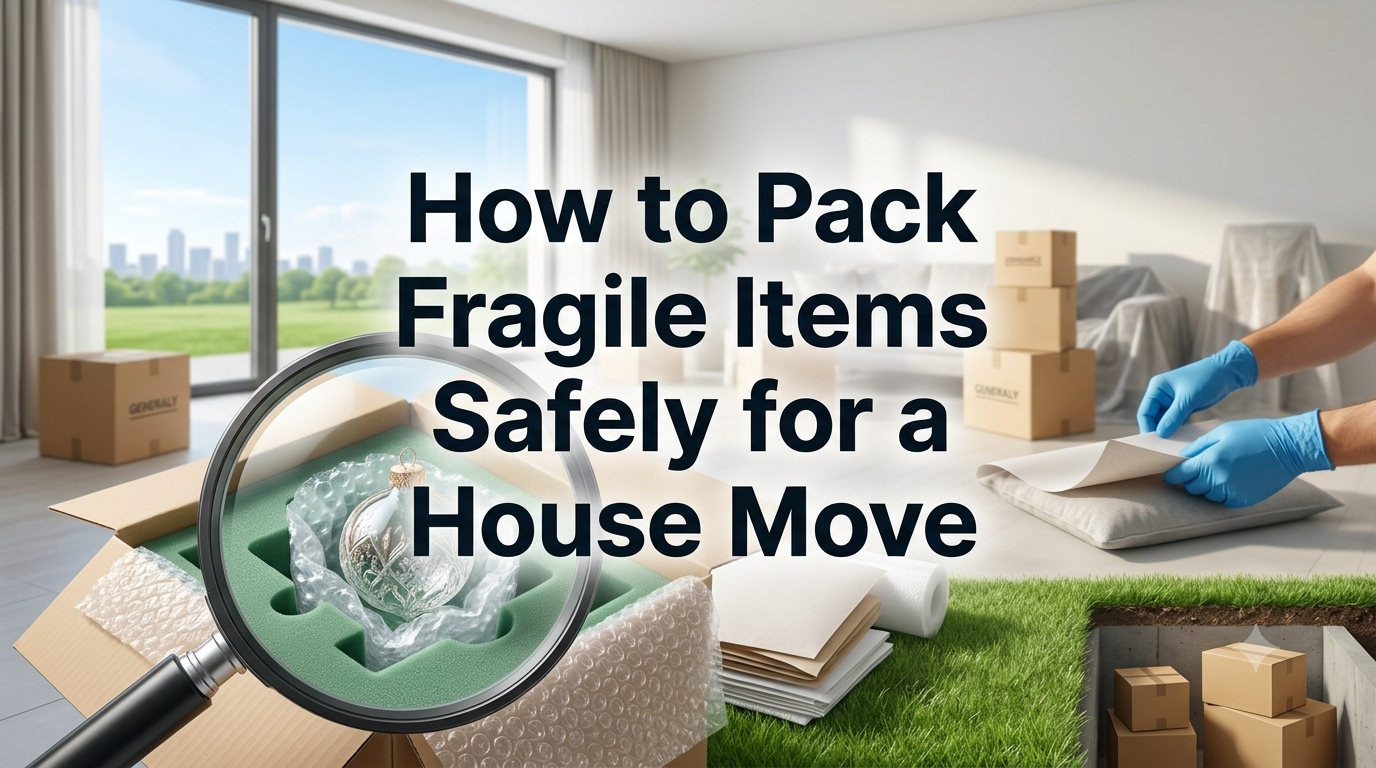
Fragile items are often the most stressful part of packing for a house move. Glassware, plates, artwork, electronics and sentimental objects may be difficult or impossible to replace. Damage usually occurs because items can move inside the container, because heavy objects are placed above delicate ones or because the container itself is crushed, dropped or exposed to moisture.
Careful packing does not need to be complicated, but it does require the right materials and a consistent method. Starting early is important. When fragile belongings are packed in a rush on the final night, corners are cut, labels are missed and unsuitable containers are used.
Choose a strong, clean container
The container should be clean, dry and strong enough to hold its shape. Worn cardboard boxes may have weakened bases or soft corners, while oversized boxes encourage overpacking. Rigid moving crates can provide a stable outer shell and can be stacked without placing direct pressure on the contents inside.
Whatever container you choose, avoid making it too heavy. A crate filled entirely with books, crockery or tools may be difficult to lift safely. Use several manageable containers rather than one extremely heavy load. The person carrying it should be able to keep the container level without straining.
Use the right wrapping materials
Packing paper is useful for wrapping crockery, filling gaps and separating surfaces. Bubble wrap can provide additional cushioning for delicate or irregular items. Soft household materials, such as clean towels and linen, can also protect some belongings, although they should not replace proper wrapping for highly fragile pieces.
Avoid using newspaper directly against light-coloured or porous items because ink can transfer. Do not rely on loose clothing as the only protection around glass or ceramics. Each fragile item should be wrapped individually so that hard surfaces cannot knock against one another during transport.
Pack plates, bowls and glassware correctly
Plates are generally safer when packed vertically on their edges, similar to records, rather than laid flat in a stack. Wrap each plate, place cushioning at the base of the container and fill empty spaces so the plates cannot shift. Bowls can be nested in small groups when each one is wrapped and the group is cushioned.
Glasses and mugs should be wrapped individually. Fill hollow centres with paper, especially for stemware, and avoid placing pressure on handles or stems. Position heavier glassware at the bottom and lighter pieces above it. Never leave a large empty space at the top where contents can bounce when the vehicle travels over bumps.
Protect electronics and appliances
Original packaging is often the best option for televisions, monitors, computers and small appliances because the inserts are shaped for the product. When original boxes are unavailable, use suitable protective sleeves, bubble wrap and rigid containers. Take photographs of cable connections before disconnecting equipment, then label cables and place accessories in a clearly marked bag.
Remove batteries where appropriate and follow the manufacturer’s transport guidance. Keep electronics dry and avoid placing them beneath liquids, cleaning products or items that could leak. Sensitive equipment should be allowed to reach room temperature before it is plugged in after moving, particularly if it has been stored in a cold or humid environment.
Handle artwork, mirrors and sentimental items separately
Artwork and mirrors require protection across the face, edges and corners. Use corner protectors, flat cardboard or specialised picture cartons where appropriate. Do not place adhesive tape directly on painted, printed or glass surfaces. Large framed pieces should remain upright and be secured so they cannot fall flat during transport.
Small sentimental items, jewellery and irreplaceable documents are often best transported personally rather than loaded with general household goods. Create a separate valuables list and keep those items under your control. This reduces both damage risk and the chance of an important item being misplaced during unloading.
Eliminate movement inside every container
A useful test is to close the container and move it gently. If you can hear or feel items shifting, add more cushioning. Fill gaps around the sides and top without forcing fragile pieces together. The aim is to stop movement while avoiding excessive pressure.
A well-planned packing system also makes handling easier. The moving crates and packing supplies available through Green Crates can help create consistent, stackable loads, but the contents still need to be wrapped and positioned correctly. Strong containers protect the outside; careful packing protects the items within.
Label clearly and communicate with movers
Mark every fragile container on the top and at least two sides. Include the destination room and an arrow where the container must remain upright. Do not assume a single fragile label guarantees careful treatment; tell the removal team which containers hold especially delicate or valuable belongings.
At the new property, place fragile containers in a safe area away from foot traffic. Unpack them on a stable surface and check contents before disposing of protective materials. A little extra time spent selecting containers, wrapping individual items and removing empty space can prevent costly and upsetting damage during the move.