There are several bodily changes to expect when pregnant, which will range in their severity from mild annoyances to rather serious side effects.Most early pregnancy changes, as with any changes to your body, are nothing to be worried about but others are life-threatening changes that demand medical intervention, like an ectopic pregnancy. Because ectopic pregnancy isn’t a viable pregnancy, identifying the ectopic pregnancy symptoms in their very earliest stages is vital because it could kill you if not treated.
In an ectopic pregnancy, a fertilized egg implants somewhere other than the lining of the uterus, which is where pregnancies typically implant. Ectopic pregnancies often occur in a fallopian tube, but they can sometimes occur in the ovary, cervix, or the abdomen. Since these places can’t support an evolving pregnancy, the tissue surrounding it can become damaged as it continues to grow.
Unfortunately, early signs and symptoms of an ectopic pregnancy can mimic those of a normal pregnancy, or even a miscarriage. This can sometimes make it difficult to recognize and diagnose a condition until an ectopic pregnancy becomes more serious. However, it is extremely important for a woman to recognize some common danger signals, and to know to seek medical care.
What Is an Ectopic Pregnancy?
What is an ectopic pregnancy?
An ectopic pregnancy occurs when a fertilized egg becomes attached to tissue outside of the uterus, typically the fallopian tube. The normally implanted embryo moves down from the fallopian tube and grows inside of the uterus where it is nurtured by an adequate blood supply.
A developing ectopic pregnancy cannot survive outside the uterus and may need to be treated immediately to prevent life-threatening hemorrhage or rupture of the tube.
Nearly 90 percent of ectopic pregnancies take place in a fallopian tube, a tubal pregnancy.
Over time this can stretch and rupture the surrounding tissue leading to extremely heavy internal bleeding. This means ectopic pregnancy signs and symptoms can never be disregarded particularly when they are acute and intense. While they occur relatively infrequently, they are medical emergencies that need immediate attention.
Early Ectopic Pregnancy Symptoms
Early pregnancy symptoms What does the earliest sign of pregnancy really look like? Most ectopic pregnancies symptoms appear within the first few weeks of conception – typically between weeks four to twelve. However this does differ significantly from woman to woman and can appear anytime from within weeks to months of conceiving.
Missed Menstrual Period
Symptoms of ectopic pregnancy Most ectopic pregnancies have a similar start to a normal pregnancy-missing a periodSome women first discover they are pregnant through a positive home pregnancy test, even before noticing any symptoms that raise concern.That’s why a positive pregnancy test by itself does not necessarily mean that the pregnancy is implanting in the uterus.
Light Vaginal Bleeding
One of the most common ectopic pregnancy symptoms is light vaginal bleeding or spotting. This bleeding is often different from a regular menstrual period. It may appear lighter, darker, or occur intermittently.
Although spotting can happen during healthy pregnancies, any bleeding during pregnancy should be discussed with a healthcare provider, especially if it occurs alongside pain.
Pelvic or Lower Abdominal Pain
Pain is another common warning sign.The discomfort is commonly reported as a sharp, persistent, cramp-like, or stabbing pain, depending on the individual.
The pain may:
- Affect one side of the lower abdomen more than the other
- Come and go or remain constant
- Gradually worsen over time
- Increase during movement or physical activity
Not every episode of abdominal pain indicates an ectopic pregnancy, but persistent or severe pain should always be evaluated promptly.
More Serious Ectopic Pregnancy Symptoms
The more ectopic pregnancy progresses, the more the symptoms would appear worse outside the womb. If your fallopian tube starts to dilate or rupture, this is often the stage.
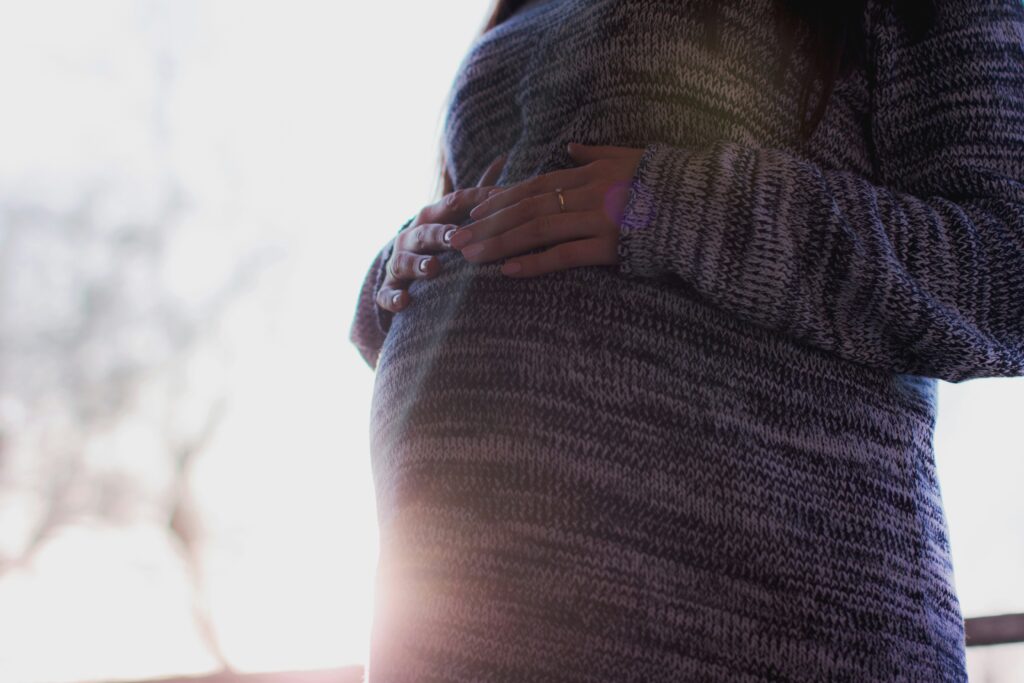
Shoulder Tip Pain
Shoulder tip pain is a less common but important warning sign. It occurs because internal bleeding can irritate the diaphragm, which shares nerve pathways with the shoulder.
Unlike muscle soreness, this pain often appears suddenly and may become worse while lying down.
Dizziness or Fainting
Internal bleeding caused by a ruptured ectopic pregnancy may reduce blood pressure.
As a result, a person may experience:
- Dizziness
- Weakness
- Feeling lightheaded
- Fainting
These symptoms require immediate emergency medical attention.
Severe Abdominal Pain
A ruptured ectopic pregnancy can cause sudden, intense abdominal pain that spreads across the abdomen or pelvis.
The pain is often much more severe than typical menstrual cramps and may be accompanied by nausea, sweating, or difficulty standing upright.
These advanced ectopic pregnancy symptoms indicate a medical emergency because significant internal bleeding may already be occurring.
Who Is at Higher Risk of an Ectopic Pregnancy?
Although an ectopic pregnancy can happen to anyone, certain factors increase the likelihood of developing one.
Risk factors include:
- A previous ectopic pregnancy
- Prior surgery involving the fallopian tubes
- Pelvic inflammatory disease (PID)
- Certain sexually transmitted infections that have caused scarring
- Endometriosis
- Fertility treatments such as in vitro fertilization (IVF)
- Pregnancy while using an intrauterine device (IUD), although pregnancy itself is uncommon with an IUD
- Smoking before conception
- Structural abnormalities of the fallopian tubes
It’s important to remember that many women diagnosed with an ectopic pregnancy have no obvious risk factors. For this reason, recognizing ectopic pregnancy symptoms remains crucial regardless of medical history.
Why Early Recognition Matters
Early diagnosis can save a life, making pregnancy health guides a valuable resource for understanding warning signs and seeking timely medical care. If it’s found and treated before it ruptures, the treatment may be simpler and the potential for bleeding and organ damage minimized.
Pregnancy blood tests, physical exams, and an ultrasound are all commonly used to test for ectopic pregnancy, with early pregnancy ultrasound playing an important role in confirming the pregnancy’s location.These exams and tests help your provider figure out if the pregnancy is in the uterus or somewhere else.
Since ectopic pregnancy can have symptoms that are similar to other early pregnancy issues, it is very important not to self diagnose yourself with ectopic pregnancy based solely on these symptoms alone. If you are pregnant and have any unexplained pain in the abdominal area, any irregular bleeding, any dizziness, or any really bad pain then you should be checked out by a medical professional.
How Is an Ectopic Pregnancy Diagnosed?
Why it’s important to detect an ectopic pregnancy early To avoid dangerous problems as a result of ectopic pregnancy, a diagnosis needs to be made as soon as possible. As symptoms of ectopic pregnancy are so similar to those of a normal pregnancy and miscarriage, healthcare professionals typically need more information than the signs themselves. The test used to measure blood human chorionic gonadotropin (hCG) concentration is one way doctors evaluate early pregnancy, alongside quantitative hCG blood testing to monitor pregnancy progression.
In normal circumstances, blood hCG concentration tends to rise at predictable rates – falling to rise slowly may be sign that things are not as they should be but not definitive for ectopy.
The test – transvaginal ultrasound scan – can sometimes be used to detect if a pregnancy is growing where it should do; in the uterus or not. There may be need to carry out repeat tests (blood concentration tests and repeat scans) before the diagnosis can be finalized.
Treatment Options
The best treatment will depend on several factors including, How big and where the ectopic pregnancy is, How the patient feels, Whether there are any signs the tube is bleeding, Depending on the answers to these questions your medical care team can recommend the best course of treatment for you: Early stage and not bleeding The patient may be prescribed medication such as methotrexate.
This medication works by stopping the pregnancy from growing and allows the body to reabsorb it over time, followed up with blood tests, Large and/or bleeding, rupture When an ectopic pregnancy ruptures or is very large and causes considerable bleeding an operation called surgery is needed The surgery is usually laparoscopic, but may be open in severe cases.
Recovery and Future Fertility
Recovery time After ectopic pregnancy In general, many people may be able to resume normal life after several weeks if the pregnancy was removed by medicine or laparoscopic surgery, but mental recovery may take longer. Having an ectopic pregnancy does not mean that you can no longer have healthy babies. The chances are good that the next one will be healthy, although women with one ectopic pregnancy have a slightly increased risk of another. That means a woman should seek prenatal care as soon as possible and her doctor may order an early ultrasound to ensure the pregnancy is in the uterus.
Can an Ectopic Pregnancy Be Prevented?
How can ectopic pregnancies be prevented? Unfortunately, there’s no sure-fire way to prevent all ectopic pregnancies – most ectopic pregnancies don’t have an apparent cause. But steps such as limiting risk of infections in the pelvis, practicing safe sex to decrease risk of STDs, not smoking, and seeking timely care for any reproductive health problem can help reduce some risk factors. The earliest possible prenatal care is an ideal approach to finding ectopic pregnancy signs before they become serious health problems.
Conclusion
Catching ectopic pregnancy symptoms as soon as possible will make a world of difference to your health. It is crucial to seek medical attention immediately if you notice any signs such as: one-sided pelvic pain vaginal bleeding which may be heavier or lighter than normal dizziness light-headedness or feeling faint pain down one shoulder on your body heavy or sharp abdominal pain Don’t dismiss these symptoms if you have a positive pregnancy test, particularly the pain and bleeding as they could be indicative of an ectopic pregnancy.
Although an ectopic pregnancy cannot develop into a full-term pregnancy, early diagnosis and timely treatment can help prevent serious complications and may improve the chances of a healthy future pregnancyof having a future pregnancy.
Frequently Asked Questions
1. What is the earliest sign of an ectopic pregnancy?
The first symptoms of an ectopic pregnancy can include mild vaginal spotting, sharp pain on one side of the abdomen, and a missed or delayed menstrual period. But, every woman experience this disease in different ways.
2. Can an ectopic pregnancy produce a positive pregnancy test?
Yes nearly all ectopic pregnancies produced enough hCG to register on a home test so will still cause you to get a positive on your pregnancy test.
3. Is an ectopic pregnancy considered a medical emergency?
Yes. A ectopic rupture is dangerous since it can lead to significant bleeding inside the body and must be attended immediately.
4. Can you have a healthy pregnancy after an ectopic pregnancy?
Yes… luckily for the majority it continues to be healthy pregnancies however you’ll have to be under supervision and informed there’s higher risk for reoccurrence.
5. When should I go to the emergency room?
Get emergency medical help for severe stomach and/or shoulder pain, faint or dizziness or to bleeding symptoms early in pregnancy.