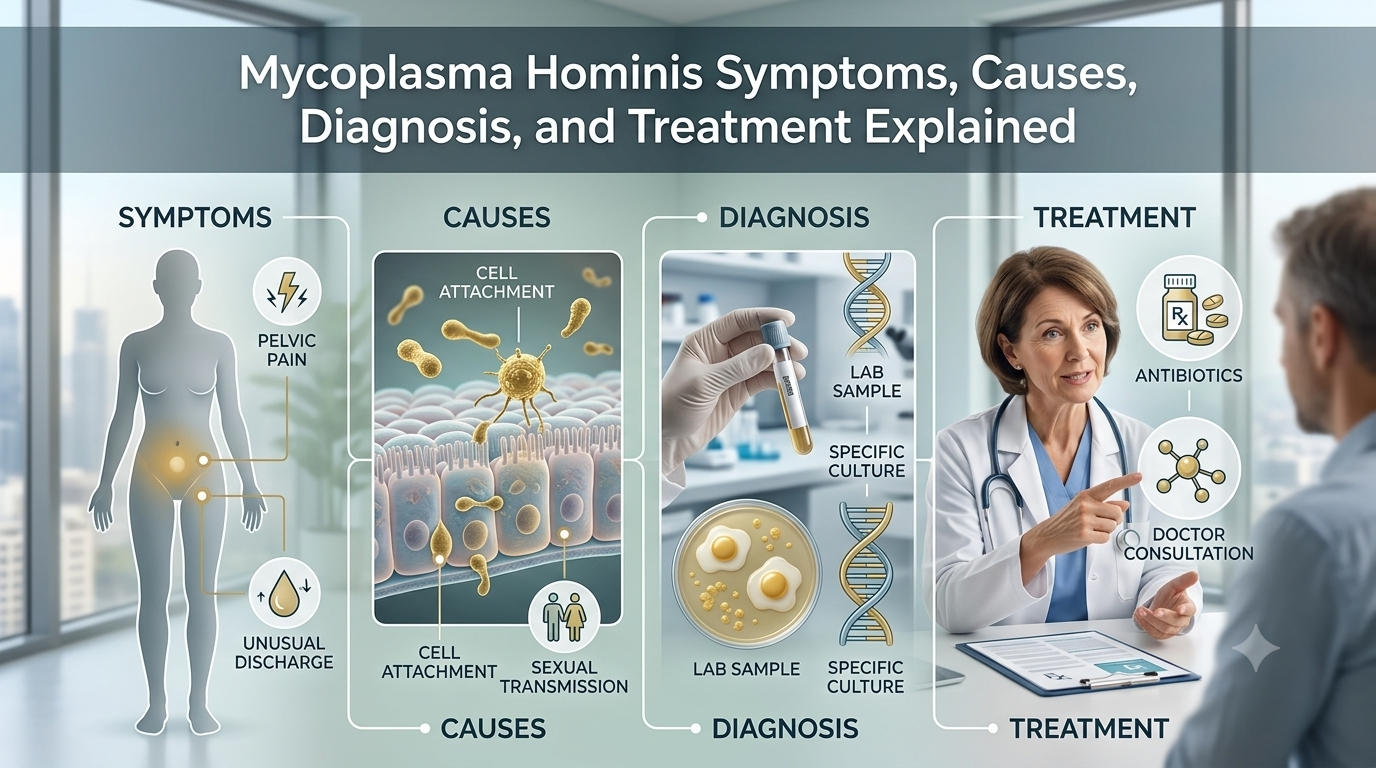
Mycoplasma hominis is a bacteria species that can inhabit the urogenital tract, leading to an infection in some cases.
To begin with, this organism is a bacterium, which normally resides inside the human urogenital tract. For most people, it does not cause any issues, as it is typically harmless on its own. Nevertheless, there are particular circumstances where it can replicate inside the host’s body causing an infection. This microorganism generally leads to mild symptoms and can often go unnoticed until specific tests are done for other conditions. Moreover, contrary to many other bacteria, mycoplasma hominis does not have a cell wall, meaning that it is not susceptible to several common antibiotics.
It is noteworthy that while mycoplasma hominis often resides in sexually active individuals, it is not classified as a sexually transmitted bacteria, as it can be present in everyone without causing any harm. Thus, it is important to understand the potential effects of this organism on the human body, as well as ways of its transmission to determine if a person needs to see a doctor. This overview aims to provide this information in order to learn more about the bacterium and its effects.
What Is Mycoplasma Hominis?
Mycoplasma Hominis Microbiology Questions Essay
Mycoplasma hominis is a bacteria species belonging to the Mycoplasma genus. The main characteristic of these microorganisms is their complicated structure and the absence of a cell wall. Instead, mycoplasmas are covered with a thinner membrane that allows them to change their shape and survive in various environments.
It colonizes the following bodies:
- Female reproductive tract
- Male reproductive tract
- Cervix
- Urethra
- Vagina
Mycoplasma infection can be absent altogether if a person was exposed to bacteria but did not develop female genital infections or male genital infections. In the medical community, colonization refers to the establishment of microorganisms in the interstitial fluid, tissues, and organs without causing disease; however, the clinical presentation of infection can vary.Although Mycoplasma hominis can be detected in some individuals, experts have not reached a complete consensus on the extent of its role in causing disease. Researchers continue to study the contribution of this microorganism to the development of various pathological conditions.
How Does Mycoplasma Hominis Spread?
The exact ways of the transmission are under investigation now, but there are several possible routes that are well documented.
Sexual Contact
The easiest way to get genital mycoplasma is to engage in vaginal intercourse or any other type of sexual activity. The reason for this is that the bacteria make their home in the genital tract. That is why both partners can get infected during intercourse.
Natural Colonization
It is possible that a person will have genital mycoplasma on a constant basis without showing symptoms. This usually happens when an individual has a healthy immune system. In such a case, bacteria are just a part of the flora that lives on the genital tract. In other words, people often have some type of microorganisms similar to mycoplasma without even knowing that.
During Pregnancy and Childbirth
A pregnant woman can transfer genital mycoplasma to her child during delivery. Although infection of the child usually does not lead to severe conditions, there is a possibility for pneumonia to develop in the newborn. This is especially true for premature babies or those with low immunity.
Even though sexual activity is the most probable way of infection, most doctors would not say that positive test results mean that a person has a sexually transmitted disease. A thorough examination and tests are required before making assumptions about STDs.
Mycoplasma Hominis Symptoms
One of the complications in diagnosing the symptoms of mycoplasma hominis is that some people do not show any symptoms of the infection. Others may exhibit similar symptoms to those of other UTI or genital infections.
Symptoms in Women
A woman with an active infection may show these symptoms:
- Discharge from the vagina
- Pelvic discomfort
- Discomfort during sexual intercourse
- Burning sensation when urinating
- Abdominal pain or lower abdominal pain
- Vaginal discomfort or irritation
Symptoms associated with mycoplasma infection in women are similar to those of bacterial vaginosis, UTIs, or other genital infections. A lab test is required to confirm the infection.
Symptoms in Men
A man may experience the following symptoms:
- Burning sensation while urinating
- Discomfort or irritation in the urethra
- Clear discharge from the penis
- Pain in the groin region
- Irritation at the tip of the penis
Most symptoms of mycoplasma infection in men are mild, and the infection may not require treatment. In other cases, it could cause serious complications that may need to be addressed by a doctor.
When There Are No Symptoms
It is a common occurrence that a large amount of people infected with mycoplasma hominis do not suffer from it. One reason for this is that the bacterium can naturally exist within the genital tract as part of the normal microbial community without triggering inflammation or harming surrounding tissues.
Due to this, the medical establishment generally does not consider it necessary to test or treat mycoplasma hominis infections without any particular grounds.
How Is Mycoplasma Hominis Diagnosed?
Diagnosing mycoplasma hominis may prove difficult for various reasons. This infection often presents similar symptoms as other reproductive or urinary tract infections.
Moreover, it is not unusual for a person to be asymptomatic, meaning that they carry the bacteria but do not feel ill. These factors contribute to the complexity of diagnosis, which is why a healthcare provider considers test results and symptoms before confirming the infection.
A doctor will want to learn more about one’s symptoms, sexual activity, potential risks, and overall health. The provider might also perform a physical exam, in addition to lab tests.
Common diagnostic methods include:
Polymerase Chain Reaction (PCR) Testing
PCR testing is one of the most reliable methods for detecting Mycoplasma hominis, and understanding polymerase chain reaction (PCR) testing can help patients better understand how modern laboratories identify bacterial infections with high accuracy. This method is based on the detection of the bacteria’s genetic material, making it possible to identify the pathogen even in trace amounts. Due to its accuracy and sensitivity, PCR has become one of the most preferred methods in many laboratories.
Bacterial Culture
Another diagnostic method is bacterial culture, which includes growing the bacteria from a sample of the patient’s urine, vaginal swab, cervical swab, or urethral swab. Although it can confirm the infection, this method is usually more time-consuming than PCR testing and requires advanced laboratory equipment.
Additional Laboratory Tests
Since many of the symptoms of mycoplasma hominis infection are similar to the signs of other diseases, healthcare providers may also want to rule out the following:
- Chlamydia
- Gonorrhea
- Trichomoniasis
- Bacterial vaginosis
- Urinary tract infections
- Other genital mycoplasma
Therefore, additional laboratory tests are necessary to identify the causative agent of the infection and prescribe the most effective treatment.
Mycoplasma Hominis Treatment
Treatment for mycoplasma hominis is indicated in case of infection. The mere fact that a person has the bacteria in their body is not enough reason for antibiotic therapy since many people are asymptomatic.
When treatment is indicated, antibiotics that are effective against bacteria that lack cell walls are typically used.
Antibiotics
The most common antibiotics used to treat mycoplasma hominis infections are those that are typically ineffective against bacteria with cell walls, such as penicillin, since mycoplasma lack cell walls. The specific antibiotics that may be prescribed will depend on the results of laboratory tests and a patient’s medical history. A doctor may prescribe:
- Doxycycline
- Clindamycin
A fluoroquinolone in an appropriate case
The choice of therapy will depend on the likelihood that the bacteria are resistant to treatment, the location of infection, pregnancy, allergies, and other factors. Patients should not begin antibiotic treatment for a Mycoplasma hominis infection without medical guidance, as the medication may not work if the underlying cause of their symptoms has not been accurately identified bacteria and antibiotic use without a doctor’s prescription may lead to antibiotic resistance.
Treatment of sexual partners
A sexual partner may also need to be treated in some cases. The decision to treat a sexual partner depends on the individual circumstances of each case and should be made by a doctor in consultation with the patient.
Possible Complications of Mycoplasma Hominis
Most people who are infected with mycoplasma hominis do not experience any severe complications. For some reasons, the bacteria can lead to serious health issues in people with weakened immunity or particular risk factors.
Among the possible complications, healthcare professionals most often identify:
- Pelvic inflammatory disease
Some studies show that mycoplasma hominis can cause PID in females. It is an infection that affects the female reproductive system, so it may lead to infertility or chronic pains in the abdominal area.
Mycoplasma hominis and pregnancy
Researchers are working on figuring out how mycoplasma hominis infection might be responsible for:
- membrane rupture
- preterm birth
- postpartum infections
However, pregnant women with the infection do not always have complications, and all cases are considered separately.
Post-surgery infections
In some instances, bacteria can cause post-surgery infections in people with weakened immune systems. The infection may appear after urogenital surgeries.
Infections outside of the genital area
The scientists state that mycoplasma hominis occasionally infects other parts of the human body, for instance, the upper respiratory tract or joints. This condition is rare, but there are reports of it among hospital workers and people with compromised immunity.
Can Mycoplasma Hominis Be Prevented?
Because of the bacteria’s capability of remaining in the body, it can sometimes be impossible to prevent mycoplasma hominis infection. Still, several ways can help avoid its severe forms, such as:
Practicing safer sex.
- Reducing the number of sexual partners.
- Getting tested regularly for sexually transmitted infections (STIs) if a person is at risk and their doctor recommends it.
- Taking all antibiotics doses as prescribed.
- Not using leftover drugs from past infections.
- Consulting a healthcare provider about the infection’s symptoms and getting proper treatment.
Following these recommendations and maintaining good reproductive health can significantly minimize the complications’ risks. Practicing health tips can also help reduce the risk of infections and support long-term reproductive wellness.
When Should You See a Doctor?
Medical treatment is advised in case your symptoms persist or recur.
Hence, consult a doctor if you have any of the following complications:
- Burning sensation while urinating
- Unusual vaginal or penile discharge
- Pelvic pain
- Discomfort during sexual intercourse
- Recent unprotected sex
- Frequent genital or urinary tract infections
- Pregnancy along with infection
A proper diagnosis will enable the doctor to determine the causative agent for your infection, which in turn will help him decide on the best medication for your case.
Common Misconceptions About Mycoplasma Hominis
There are a number of myths regarding the bacterium Mycoplasma hominis that can lead to misunderstanding or cause people to worry unnecessarily.
Myth: It is always a sexually transmitted infection.
Fact: Although Mycoplasma hominis can be transmitted through sexual activity, it can also be present in healthy people as part of the normal microbiota.
Myth: A positive test always requires antibiotics.
Fact: Antibiotics are typically only necessary if the bacteria are causing symptoms or are identified as the cause of an infection.
Myth: All positive tests are bad since everyone who has the bacteria will become sick.
Fact: Most people who have Mycoplasma hominis do not experience any symptoms and may never become ill from it.
Being aware of these myths can help patients navigate their conversations with medical professionals.
Conclusion
Mycoplasma hominis is an unusual bacteria that often lives in the urinary tract. While some people encounter it without showing symptoms, it can cause infections in the genital area or urinary tract.
Since Mycoplasma’s symptoms are similar to many other conditions, proper lab tests are necessary in order to receive correct treatment.
When making treatment decisions, it is important to take into account the symptoms, the medical history, and the test results. Do not attempt to treat this infection on your own – if the bacteria is present and needs to be removed, your doctor will discuss the proper meds with you. On the other hand, receiving unnecessary antibiotics can make you more resistant to them in the future. In case of any concerns about your genital health, make sure to consult a professional, who will investigate the causes of your discomfort and help you receive proper treatment. With the right approach, most complications can be prevented.
Remember to take good care of your health!
Frequently Asked Questions (FAQs)
1. Is Mycoplasma hominis an STD?
This bacterium is transmitted through sexual contact, but it is not considered an STD as it does not necessarily come with specific symptoms. Moreover, it is common in healthy adults, and it is normal to have it without being infected.
2. Can Mycoplasma hominis go away on its own?
It can be present in many people without causing any particular problems. In that case, doctors would not recommend any particular treatment. However, it is better to consult a specialist if there are symptoms because they may need antibiotics or other medications.
3. What antibiotics are used for Mycoplasma hominis?
Since this bacterium does not have cell walls, antibiotics like penicillin are ineffective, making it important to understand antibiotic resistance and appropriate antibiotic use when treating bacterial infections.
There are still antibiotics that can be used to fight more severe infections, but the doctor should decide whether there is a need for them.
4. Does Mycoplasma hominis cause problems during pregnancy?
It is reported that mycoplasma hominis can cause miscarriage, preterm birth, and postpartum infection. Still, these complications are not inevitable, and most pregnant women who have the bacterium do not experience negative effects. Nevertheless, it is important to follow the advice of healthcare providers.
5. Can men get Mycoplasma hominis?
They can contract it from their partners, as it lives in the reproductive system and urine tract. In most cases, there are no severe symptoms, but it is possible to experience burning sensations while urinating, pelvic pain, or urethral irritation.
6. Does My partner need to be tested for Mycoplasma hominis?
If an infection is diagnosed, the sex partner may need to receive treatment as well, but it depends on the situation. In each particular case, it is better to rely on the recommendations of doctors.
7. Can Mycoplasma hominis make a person infertile?
There are reports that this bacterium can cause female infertility by provoking PID, but there is no enough evidence for that. In most cases, Mycoplasma hominis is asymptomatic, and it rarely causes any serious infections that can lead to infertility.