Microneedling has become one of the most popular minimally invasive skin treatments for improving acne scars, fine lines, enlarged pores, uneven skin tone, and overall skin texture. Many people see impressive before-and-after photos online, leading them to expect dramatic improvements after just one appointment.
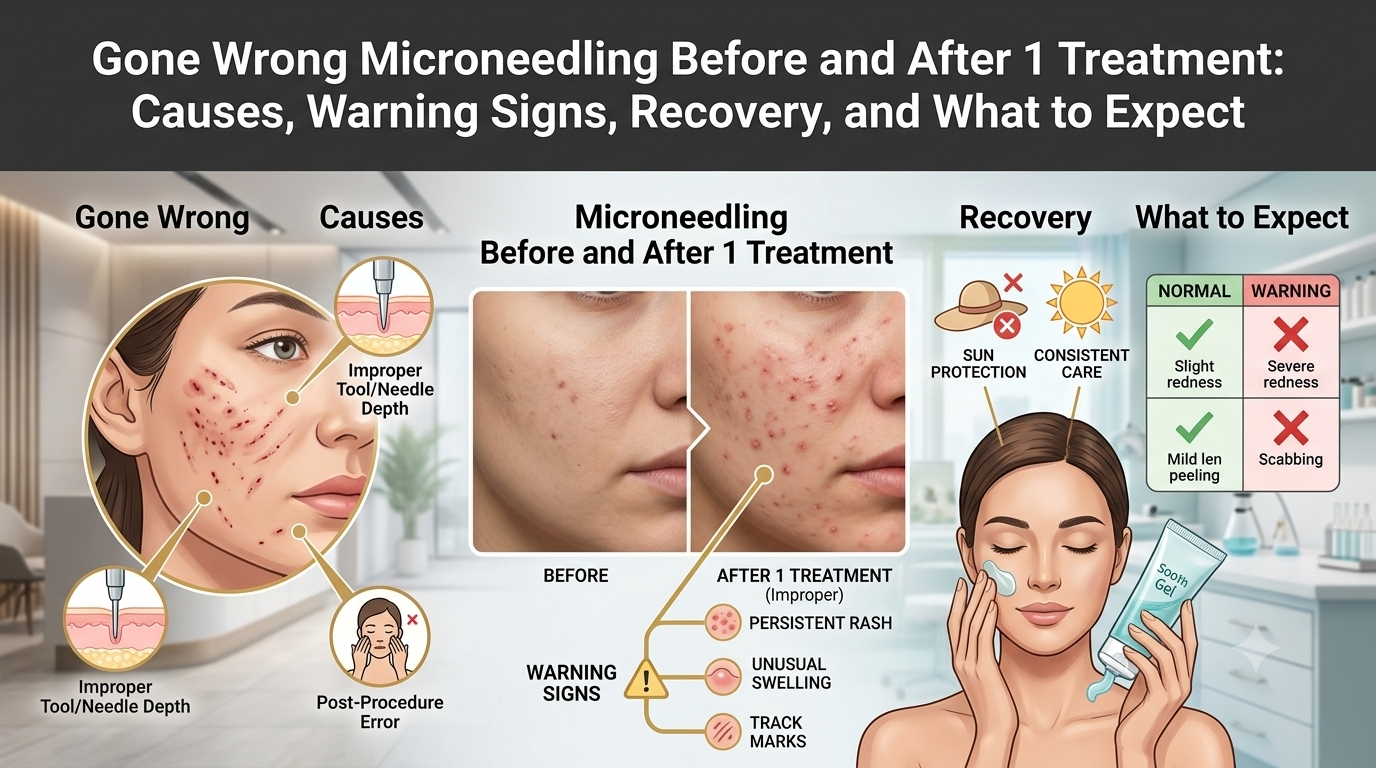
However, not every experience goes as planned. People searching for gone wrong microneedling before and after 1 treatment are often concerned about unexpected redness, prolonged swelling, skin irritation, pigmentation changes, breakouts, or disappointing cosmetic results. Others are researching the procedure before deciding whether it’s right for them.
The reality is that a single microneedling treatment rarely produces dramatic changes overnight. Some temporary side effects are completely normal and are part of the skin’s healing response. More serious complications are much less common but can occur if the procedure is performed incorrectly, if inappropriate aftercare is followed, or if the treatment isn’t suitable for the individual’s skin.
This guide explains what to expect after one treatment, how to recognize normal healing, what complications deserve attention, and how to reduce the risk of problems.
What Is Microneedling?
Microneedling, also called collagen induction therapy, is a cosmetic procedure that uses tiny sterile needles to create controlled micro-injuries in the skin.
These microscopic channels stimulate the body’s natural healing process, encouraging the production of:
- Collagen
- Elastin
- New skin cells
Over time, this process may improve:
- Acne scars
- Fine lines
- Mild wrinkles
- Uneven skin texture
- Enlarged pores
- Certain types of pigmentation
- Overall skin quality
The treatment can be performed using professional microneedling devices in medical clinics or dermatology offices. Home microneedling devices also exist, but they generally use much shorter needles and are not equivalent to professional treatments.
What Does “Gone Wrong Microneedling Before and After 1 Treatment” Mean?
The phrase gone wrong microneedling before and after 1 treatment doesn’t always indicate a serious medical complication.
Many people compare their skin immediately after treatment with idealized before-and-after photos found online. When they see redness, peeling, or temporary breakouts instead of instant glowing skin, they assume something has gone wrong.
In reality, a certain amount of redness, sensitivity, and dryness is expected during the early healing phase.
However, the phrase may also refer to genuine complications such as:
- Infection
- Persistent inflammation
- Skin burns from combined treatments
- Post-inflammatory hyperpigmentation
- Scarring
- Allergic reactions to products applied afterward
- Poor cosmetic outcomes
Understanding the difference between normal healing and true complications is essential.
What Should You Expect After One Microneedling Treatment?
One treatment usually provides subtle improvements rather than dramatic transformation.
The exact outcome depends on:
- Skin condition
- Treatment depth
- Device used
- Individual healing response
- Treatment goals
For example, someone seeking brighter skin may notice changes sooner than someone treating deep acne scars.
Many concerns, especially acne scarring and wrinkles, often require multiple professionally spaced sessions for noticeable improvement.
Normal Healing After Microneedling
Immediately after treatment, your skin begins a controlled healing process.
This temporary inflammation is intentional and supports collagen production.
Normal reactions commonly include:
Redness
Most people experience redness similar to a moderate sunburn.
This usually improves over one to three days.
Mild Swelling
Some facial puffiness is expected, especially around sensitive areas.
Swelling generally improves within several days.
Tightness
Your skin may feel tighter or drier than usual while healing.
This sensation typically decreases as the skin barrier recovers.
Flaking
Light peeling or flaking may occur as older skin cells shed naturally.
Avoid picking at peeling skin.
Increased Sensitivity
Your skin may temporarily react more strongly to skincare products, sunlight, or heat.
This is why gentle aftercare is so important.
Why Do Some Microneedling Treatments Go Wrong?
Several factors increase the likelihood of complications.
Inadequate Sterilization
Professional microneedling requires sterile equipment and proper infection-control procedures.
Using contaminated devices increases the risk of bacterial infection.
Incorrect Needle Depth
Needles that penetrate too deeply may increase trauma without improving results.
Excessive depth may increase the risk of:
- Prolonged redness
- Delayed healing
- Pigmentation changes
- Scarring
Different facial areas require different treatment depths.
Experienced practitioners adjust settings according to skin thickness and treatment goals.
Poor Candidate Selection
Microneedling isn’t suitable for everyone.
Treatment may need to be postponed or avoided in people with:
- Active acne outbreaks
- Skin infections
- Certain inflammatory skin conditions
- Poor wound healing
- Some medical conditions affecting skin repair
A thorough consultation helps identify these concerns before treatment.
Improper Aftercare
Even technically excellent treatment can produce disappointing results if aftercare instructions aren’t followed.
Examples include:
- Excessive sun exposure
- Applying irritating skincare products too soon
- Picking at healing skin
- Swimming in contaminated water immediately afterward
Proper aftercare supports normal healing and reduces complications.
Common Signs of Gone Wrong Microneedling Before and After 1 Treatment
Most people heal without significant problems.
However, some symptoms deserve closer attention.
1. Persistent Redness
Redness lasting longer than expected isn’t always a complication, but prolonged inflammation should be assessed.
Possible causes include:
- Aggressive treatment
- Sensitive skin
- Irritant reactions
- Infection
2. Unexpected Breakouts
Some people experience temporary acne-like breakouts during healing.
Possible explanations include:
- Skin purging (although true purging is debated and not expected from microneedling alone)
- Occlusive products
- Irritation
- Bacterial contamination
Persistent or severe breakouts should be evaluated.
3. Hyperpigmentation
One of the more concerning cosmetic complications is post-inflammatory hyperpigmentation (PIH).
Instead of improving skin tone, inflammation triggers darker patches after healing.
People with medium to deep skin tones may have a higher risk if treatment isn’t appropriately adjusted.
Sun protection after treatment is particularly important.
4. Uneven Texture
Some patients worry that their skin feels rougher after treatment.
Temporary roughness during healing is common.
However, persistent textural changes should be discussed with the treating provider.
5. Delayed Healing
Most superficial healing occurs within several days.
If your skin remains extremely inflamed or appears to worsen rather than improve, medical assessment is recommended.
Less Common but More Serious Complications
Fortunately, serious complications are uncommon when microneedling is performed correctly.
However, they can occur.
Infection
Signs may include:
- Increasing redness
- Warmth
- Swelling
- Pus
- Fever
Medical treatment should not be delayed.
Allergic Reactions
Sometimes the procedure itself isn’t responsible.
Instead, products applied immediately afterward trigger irritation or allergic reactions.
Because the skin barrier is temporarily more permeable after microneedling, inappropriate products may penetrate more deeply than usual.
Scarring
Scarring is uncommon but possible if:
- Treatment is excessively aggressive.
- Infection develops.
- Healing is disrupted.
- Picking occurs during recovery.
Post-Inflammatory Hyperpigmentation
Persistent pigmentation changes deserve evaluation, especially if they continue beyond the expected healing period.
Early management may improve outcomes.
Early Warning Signs You Shouldn’t Ignore
Although many temporary changes are normal, contact your provider promptly if you notice:
- Worsening redness after several days
- Severe swelling
- Increasing pain
- Yellow drainage
- Fever
- Significant skin discoloration
- Blistering
- Rapidly spreading rash
These symptoms require professional assessment rather than home treatment.
Who Is More Likely to Experience Complications?
Certain individuals have a higher likelihood of experiencing problems after microneedling.
People With Active Acne
Treating inflamed acne lesions may increase irritation and spread bacteria across the skin.
Individuals With Recent Sunburn
Microneedling should not be performed on sunburned skin because the skin barrier is already damaged.
Patients With Darker Skin Tones
Microneedling can often be performed safely on darker skin types, but treatment settings and aftercare should be chosen carefully to reduce the risk of post-inflammatory hyperpigmentation.
Home Device Users
Professional devices differ significantly from over-the-counter dermarollers.
Improper technique, inadequate sterilization, or excessive pressure at home increases the likelihood of complications.
Before-and-After Expectations After One Session
Many online images showing dramatic transformations actually represent the results of multiple treatments combined with consistent skincare and adequate healing time.
After one professional microneedling session, realistic improvements may include:
- Slightly brighter skin
- A smoother surface texture
- Improved hydration when combined with appropriate skincare
- Mild refinement of pore appearance
Deep acne scars, pronounced wrinkles, and significant pigmentation typically require multiple sessions before meaningful changes become apparent.
Understanding this helps prevent disappointment and reduces the mistaken belief that gone wrong microneedling before and after 1 treatment always indicates a failed procedure.
Red Flags When Choosing a Microneedling Provider
One of the most effective ways to reduce the risk of gone wrong microneedling before and after 1 treatment is selecting a qualified provider.
Be cautious if a clinic:
- Promises dramatic results after a single session.
- Doesn’t review your medical history.
- Uses non-sterile or questionable equipment.
- Recommends treatment despite active skin infections.
- Doesn’t explain aftercare instructions.
- Cannot answer questions about complications or recovery.
A reputable provider should carefully assess your skin, explain realistic expectations, and recommend an individualized treatment plan.
Recovery Timeline: What to Expect After One Microneedling Treatment
If you’re searching for gone wrong microneedling before and after 1 treatment, it’s important to understand that the skin heals in stages. Many concerns that seem alarming during the first few days are actually part of the normal recovery process.
The timeline below outlines what most people can expect after a professional microneedling session.
| Time After Treatment | What You May Notice |
| First 24 hours | Redness, mild swelling, warmth, tightness, and sensitivity similar to a sunburn |
| Days 2–3 | Redness begins fading, skin may feel dry or rough |
| Days 3–7 | Mild flaking or peeling as the skin renews itself |
| Weeks 2–4 | Skin gradually appears smoother, brighter, and more even |
| 1–3 months | New collagen production continues, with gradual improvement in texture and fine lines |
For concerns like acne scars or deeper wrinkles, visible improvements often require several professionally spaced treatments rather than a single session.

What Should You Do If Microneedling Goes Wrong?
If you believe you’re experiencing gone wrong microneedling before and after 1 treatment, avoid self-diagnosing based on online photos alone.
They can determine whether you’re experiencing:
- Normal healing
- Temporary irritation
- An allergic reaction
- A developing infection
- Another complication requiring treatment
Prompt communication often prevents minor issues from becoming more serious.
Don’t Pick or Scratch Your Skin
As the skin heals, peeling and dryness are common. Picking at flaking skin can increase the risk of:
- Infection
- Delayed healing
- Scarring
- Post-inflammatory hyperpigmentation
Allow the skin to shed naturally.
Keep Your Skincare Routine Simple
Immediately after treatment, the skin barrier is temporarily weakened.
Many professionals recommend using only gentle products during the initial recovery period.
Avoid introducing strong active ingredients too soon, such as:
- Retinoids
- Strong exfoliating acids
- High-strength vitamin C products
- Physical scrubs
Your provider can recommend when it’s appropriate to resume your normal routine.
Protect Your Skin From the Sun
Freshly treated skin is more vulnerable to ultraviolet (UV) damage.
Daily use of broad-spectrum sunscreen, along with protective clothing and limiting direct sun exposure, helps reduce the risk of pigmentation changes during healing.
Can Microneedling Complications Be Treated?
In many cases, yes.
The appropriate treatment depends on the specific problem.
Persistent Redness
If redness lasts longer than expected, your provider may evaluate for:
- Irritant dermatitis
- Infection
- Inflammatory skin conditions
- Excessive treatment intensity
Treatment varies according to the underlying cause.
Infection
Bacterial infections usually require prompt medical assessment.
Treatment may include prescription medications depending on the severity and type of infection.
Attempting to treat a suspected infection at home may delay appropriate care.
Hyperpigmentation
Post-inflammatory hyperpigmentation often fades gradually but may take several months.
A dermatologist may recommend one or more of the following treatment options:
- Prescription lightening creams
- Gentle pigment-correcting skincare
- Strict sun protection
- Additional procedures once the skin has fully healed
Management should always be individualized.
Scarring
Although uncommon, scarring may require evaluation by a dermatologist.
Treatment depends on:
- Scar type
- Skin type
- Healing response
- Time since injury
Early assessment may improve long-term outcomes.
When Should You Seek Immediate Medical Care?
Most side effects improve without emergency treatment.
However, seek urgent medical attention if you develop:
- Fever with increasing redness
- Pus or foul-smelling drainage
- Severe swelling that rapidly worsens
- Intense pain
- Blistering
- Rapidly spreading rash
- Signs of a severe allergic reaction, such as difficulty breathing or facial swelling
These symptoms should never be ignored.
How to Reduce the Risk of Microneedling Gone Wrong
While no cosmetic procedure is completely risk-free, careful planning can significantly lower the chance of complications.
Choose an Experienced Provider
The person performing your treatment matters just as much as the device being used.
Look for someone who:
- Has appropriate medical or licensed aesthetic training
- Understands skin anatomy
- Uses sterile, single-use needles when applicable
- Performs a thorough consultation
- Provides detailed aftercare instructions
Experience often leads to safer treatments and more predictable outcomes.
Be Honest About Your Medical History
Before treatment, tell your provider if you have:
- Active acne
- Cold sores
- Eczema
- Psoriasis
- Recent sunburn
- Skin infections
- A history of abnormal scarring
- Current medications that affect healing
This information helps determine whether microneedling is appropriate or should be postponed.
Follow Aftercare Carefully
Proper aftercare helps support the skin’s natural healing process.
General recommendations may include:
- Cleansing gently
- Avoiding makeup for the period recommended by your provider
- Avoiding swimming until the skin has recovered
- Using approved moisturizers
- Wearing sunscreen daily
Your provider’s specific instructions should always take priority.
Have Realistic Expectations
One of the biggest reasons people search for gone wrong microneedling before and after 1 treatment is unrealistic expectations.
While some individuals notice brighter skin after one appointment, significant improvements in:
- Acne scars
- Deep wrinkles
- Stretch marks
- Advanced sun damage
They typically require multiple treatment sessions along with a consistent skincare routine.
Common Myths About Microneedling
Myth: One treatment should completely transform my skin.
Most cosmetic concerns improve gradually. Multiple sessions are commonly recommended for deeper skin concerns.
Myth: Redness means the treatment failed.
Temporary redness is an expected part of the healing process.
Persistent or worsening redness should be evaluated, but early redness alone isn’t usually a sign of failure.
Myth: Stronger treatment always produces better results
More aggressive needle depth doesn’t automatically create better outcomes.
Treatments should be customized based on skin type, treatment goals, and safety.
Myth: Home dermarollers work the same as professional microneedling.
Professional devices differ in needle design, depth control, and sterility.
Home devices are not direct substitutes for clinical treatment.
Expert Insights
Dermatologists and aesthetic practitioners often emphasize that microneedling is a treatment that rewards patience rather than immediate gratification. The procedure stimulates the body’s natural repair mechanisms, and collagen remodeling continues for weeks after the initial redness has faded.
Experts also stress that successful results depend on proper patient selection, realistic expectations, and meticulous aftercare. Attempting to speed up healing with harsh skincare products or undergoing treatments too frequently may increase irritation instead of improving results.
Another important point is that before-and-after photos shared online often represent outcomes after a series of treatments, not a single session. Understanding this helps set realistic expectations and reduces unnecessary disappointment.
Frequently Asked Questions
1. Is it normal to look worse immediately after microneedling?
Yes. Redness, swelling, tightness, and mild peeling are common during the first several days and usually improve as the skin heals.
2. Can one microneedling treatment permanently damage my skin?
Permanent damage is uncommon when the procedure is performed correctly. Most temporary side effects resolve with proper healing, though serious complications require prompt medical attention.
3. How long should I wait before judging my results?
Most providers recommend waiting several weeks because collagen production continues after the initial healing phase. Final improvements often develop gradually.
4. Can microneedling make acne scars look worse?
Temporary inflammation may make scars appear more noticeable initially. True worsening is uncommon but should be evaluated if persistent.
5. Who should avoid microneedling?
Individuals with active skin infections, recent sunburn, certain inflammatory skin conditions, or other contraindications may need to postpone or avoid treatment. A consultation with a qualified provider is essential.
6. Why didn’t I see dramatic before-and-after results after one treatment?
Most people require multiple sessions to achieve significant improvement in acne scars, wrinkles, or uneven texture. One session often produces subtle rather than dramatic changes.
7. How can I reduce the risk of complications?
Choose an experienced provider, follow all aftercare instructions, protect your skin from the sun, avoid picking at healing skin, and communicate promptly with your provider if concerning symptoms develop.
Conclusion
Searching for gone wrong microneedling before and after 1 treatment often reflects uncertainty about whether the healing process is normal or whether something has gone wrong. While redness, mild swelling, peeling, and temporary sensitivity are expected after a professional microneedling session, worsening pain, signs of infection, severe blistering, or persistent inflammation should never be ignored.
It’s also important to have realistic expectations. One treatment can improve skin brightness and texture, but concerns such as acne scars, fine lines, and pigmentation usually require multiple sessions to achieve meaningful results. Many dramatic before-and-after photos online represent cumulative improvements rather than the outcome of a single appointment.
The best way to reduce the risk of complications is to choose a qualified provider, disclose your medical history, follow aftercare instructions carefully, and protect your skin during recovery. When performed appropriately and combined with proper healing, microneedling remains a widely used procedure for supporting healthier, smoother-looking skin. Explore more beauty and self-care guides on Lifestyle Shore.