When was the last time you thought about your breathing? It’s something we often overlook until there is a problem. Surgery, illness, or even being confined to a bed for too long can leave us unable to properly inflate our lungs. Failure to do so can cause pockets of air and fluids to build up in your lungs. In order to prevent this from happening doctors often recommend an incentive spirometer to make sure you are properly inflating your lungs.
An Incentive spirometer is a small hand held device that induces slow deep breathing. This small handy looking device can actually be a very valuable asset to patients who are recovering from any form of illness or surgery. This simple piece of equipment is extremely helpful and can ensure that patients are getting the proper deep breathing they need to properly inflate their lungs
Whether it be after surgery, being ill, or if the doctor just told you to do deep breathing exercises it is important you know how the spirometer can aid in your recovery. This guide will cover some of the advantages of using this helpful tool along with some other necessary information.
What Is an Incentive Spirometer?
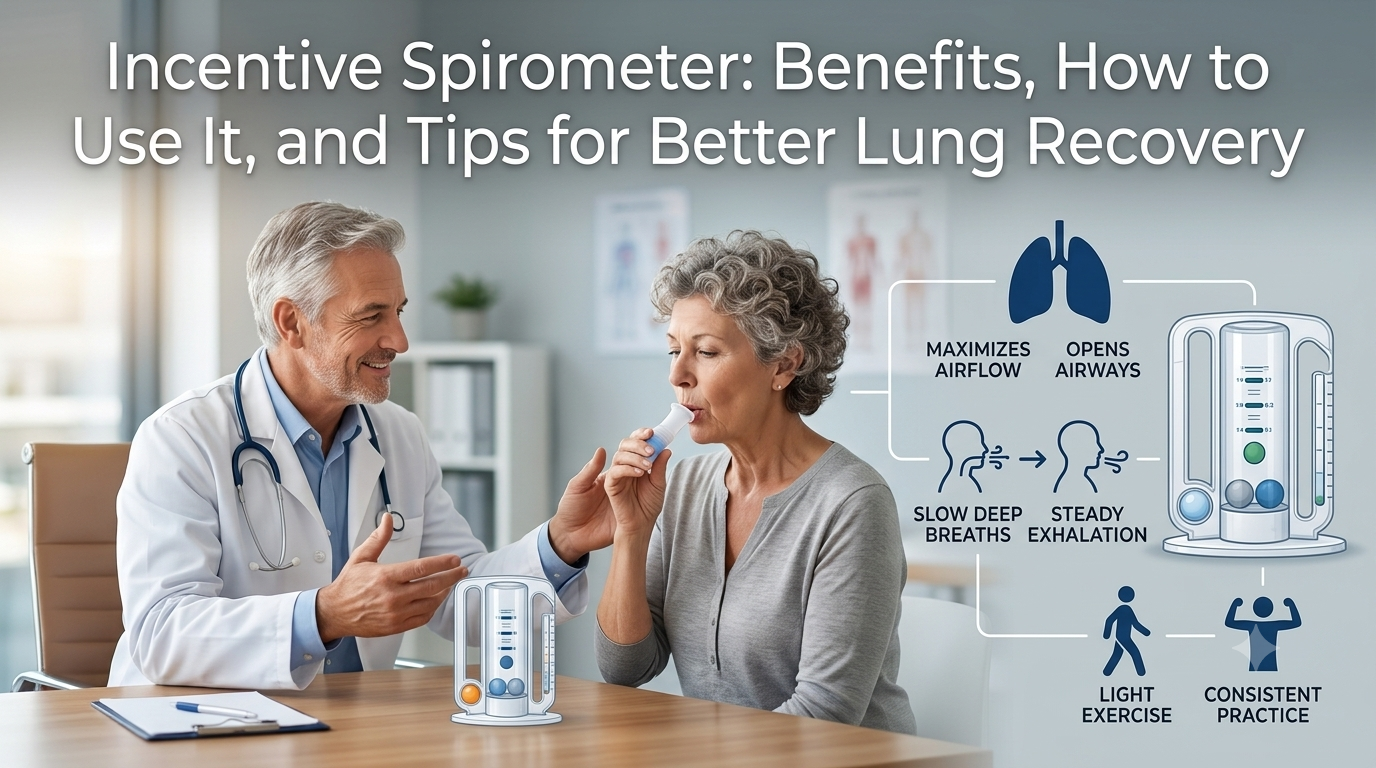
An incentive spirometer is a handheld device that helps patients practice slow, deep breathing to improve lung function.The device is designed to help expand the lungs.
An incentive spirometer is usually made up of the following components:
- A mouthpiece
- A transparent chamber with a movable indicator (or piston)
- Scales to indicate the volume of air inhaled
- Flexible hoses that connect to the chamber
When a patient takes a breath into the incentive spirometer, the indicator moves upwards, showing the amount of air inhaled. Many of these devices also have an indicator, which shows whether the patient has taken a suitable breath in terms of pace. An incentive spirometer is primarily a breathing-assisting device rather than a diagnostic tool, unlike other spirometers.
The incentive spirometer is designed to aid in the expansion of the lungs.
How Does an Incentive Spirometer Work?
- The purpose of an incentive spirometer is to help you take deeper breaths that will open up your lungs fully.
- After surgery, it is easy to become tired and take shallow breaths, which can cause some of your air sacs to collapse
- Using an incentive spirometer will help you take deeper breaths and
- encourage expansion of the lungs
- improve ventilation,
- Support the exchange of oxygen and carbon dioxide.
- promote effective deep breathing,
- remove secretions
The incentive spirometer will help you to set a goal based on how much you are able to breathe in, and how much your doctor believes you should breathe in. When taking the breaths you need to make sure that you are doing so slowly, deeply, and fully, in order to properly inflate your lungs.
Who May Need an Incentive Spirometer?
Health care professionals often recommend an incentive spirometer to individuals whose lungs need an incentive to perform deeper breaths.
The following are some of the reasons why the device may be recommended:
Following Surgery
Following surgery, many patients perform breathing exercises to reduce the risk of lung complications such as atelectasis, a condition in which small air sacs in the lungs partially collapse due to shallow breathing.
It is common for individuals to take shallow breaths following a chest or abdominal surgery. The shallow breathing may lead to ineffective deep breathing, and incentive spirometry often encourages deeper breaths, helping the patient recover from the surgery.
Prolonged Period of Bed Rest
The spirometer may also be recommended to individuals who are too ill to be active or sit upright in bed for long periods of time.
Specific Illnesses
Some doctors may recommend deep breathing exercises to individuals recovering from specific lung ailments if the therapy is deemed appropriate for them.
Limited Physical Activity
Individuals whose physical activity is limited may experience abnormal lung function. The spirometer may be recommended to help them perform better while recovering from an illness.
It is important to remember that the spirometer should only be used as recommended by a doctor.
Benefits of Using an Incentive Spirometer
Regular use of an incentive spirometer can provide several important benefits during recovery.
Supports Lung Expansion
Deep breathing helps open areas of the lungs that may not fully inflate during shallow breathing.
Encourages Healthy Breathing Habits
The device teaches users to inhale slowly and deeply rather than taking quick, shallow breaths.
Helps Clear Lung Secretions
Helps clear lung secretions. Patients recovering from respiratory illnesses can also benefit from learning effective airway clearance techniques that help loosen mucus and improve breathing.
Deep breaths may help loosen mucus, making it easier to clear the airways through normal coughing.
Promotes Recovery After Surgery
Healthcare providers often recommend breathing exercises after surgery to support normal lung function during healing.
Provides Visual Motivation
Seeing measurable progress on the device can encourage patients to continue practicing their breathing exercises consistently.
How to Use an Incentive Spirometer Correctly
Although there might be some differences in these steps for different devices, the instructions are generally similar.
Sitting
Sit comfortably and, if possible, support the back. Sitting position allows the lungs to open fully.
Holding the Incentive spirometer
Make sure to hold the incentive spirometer upright so the indicator can move freely.
Exhaling
Before putting the mouthpiece of the spirometer to your mouth, release the air from the lungs.
Sealing the lips
Be sure to close your lips tightly around the mouthpiece so it does not slip out.
Inhaling slowly and deeply
Inhale slowly and deeply into the spirometer using your mouth. Make sure to watch the indicator so it moves upwards. Do not forget to continue doing slow deep breaths.
Holding the breath
Hold your breath for a few seconds if your doctor tells you to do so.
Exhaling again
Take the mouthpiece away from your mouth and exhale gently. Then, repeat the steps outlined the required number of times.
How Often Should You Use an Incentive Spirometer?
There are no general recommendations concerning the use of an incentive spirometer. In most cases, patients who have undergone surgery are advised to perform incentive spirometry several times a day while being awake. However, each patient should consult a healthcare professional and establish a schedule of spirometry that is convenient for them. Therefore, it is best to rely on personal recommendations provided by healthcare professionals.

Common Mistakes to Avoid
Proper use of the incentive spirometer is essential to ensure healing of the lungs after surgery.
The most common mistakes committed by patients are:
- tachypnea or rapid shallow breathing,
- leaning back when using the device,
- not forming a proper seal with the lips,
- failure to clean the device if necessary,
- and failure to perform breathing exercises.
If you have any questions about the use of the incentive spirometer, be sure to ask your doctor for assistance.
Cleaning and Caring for an Incentive Spirometer
Proper cleaning of the device ensures its proper functioning and prevents contamination. In addition, various manufacturers offer different ways of cleaning, which includes the following instructions:
- Cleaning the mouthpiece
- Air-drying of the device;
- Storing the device in a clean place;
- Preventing damage to the tubing during the procedure
It is essential to follow the specific cleaning and sterilization recommendations provided by the manufacturer of the incentive spirometer.
Are There Any Risks?
For most people, using an incentive spirometer is considered safe when performed correctly.
Some users may briefly experience:
- Mild dizziness after repeated deep breaths
- Temporary coughing
- Fatigue if breathing exercises are performed too aggressively
If you develop severe chest pain, difficulty breathing, or worsening symptoms while using the device, contact your healthcare provider promptly.
Tips for Getting the Best Results
- To get the most out of your breathing exercises
- sit up straight when you can
- try to take slow, deliberate breaths
- stick to your breathing schedule
- ask questions if you’re confused
- It’s also a good idea to do breathing exercises along with walking or other forms of movement, if your doctor approves
- Most importantly, you should try to be as consistent as possible, even if you’re only doing a few exercises at a time
When Should You Contact Your Healthcare Provider?
Contact your healthcare provider if:
- Breathing becomes more difficult.
- You develop a fever after surgery.
- You notice worsening cough or chest discomfort.
- You are unable to perform the breathing exercises.
- You are uncertain whether you are using the device correctly.
Early communication allows healthcare providers to address concerns before complications develop.
Conclusion
An incentive spirometer is an inexpensive yet valuable tool that is used to encourage a person to perform deep breaths into their own lungs in order to effectively clear the airway of unwanted materials. In cases of post-surgery, being bedridden, or when suffering from an illness, an incentive spirometer is a great device that helps aid the patient to assure proper healing while reducing the chances of getting any complications related to improper breathing with the right incentive spirometer usage alongside proper medical care.
It can also improve the patient’s ability to breathe and the overall quality of life. Browse our respiratory health guides for more expert information on lung conditions, breathing exercises, recovery tips, and preventive care.
However, an incentive spirometer should not be relied upon solely to treat the diseases associated with improper breathing, but instead should be used in combination with other treatments advised by the physician. Patients should discuss with their doctor about how often they should be using an incentive spirometer and if it is the most appropriate method for their personal care.
Frequently Asked Questions
1. What is an incentive spirometer used for?
An incentive spirometer is a device that helps you to take deep breaths to help you inflate your lungs to the maximum after surgery, illness, or prolonged immobility.
2. How many times should I use an incentive spirometer a day?
It depends on the patient’s particular condition and the doctor’s orders.
3. Can an incentive spirometer help prevent pneumonia?
It can help in reducing certain post-surgical complications; however, it cannot ensure that a person will not acquire sicknesses such as pneumonia.
4. Why do I keep coughing after using an incentive spirometer?
Some patients experience coughing as a side effect of using the incentive spirometer. Deep breathing can cause loosening of the secretions in the airways, and coughing is often a typical response to this.
5. Is an incentive spirometer easy to use?
Yes. It usually takes only a short time to learn how to use the incentive spirometer, especially when a healthcare professional is assisting the patient and providing instructions.